

How AI is Transforming Recruitment: Insights from 9 Leading Companies
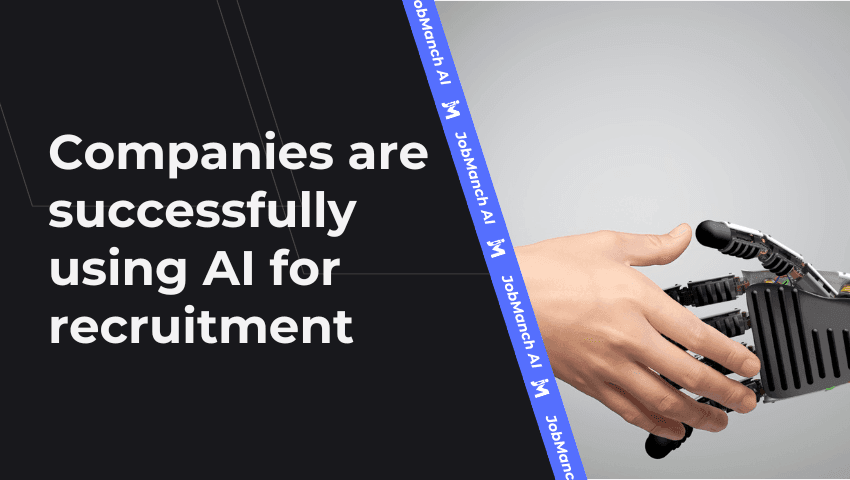
Recruitment has traditionally been a time-intensive process, often plagued by inefficiencies and subjective decision-making. AI is changing this by automating repetitive tasks, analyzing vast datasets, and providing data-driven insights. According to a 2024 study, 68% of companies are expected to adopt AI for hiring by the end of 2025, up from 51% in 2024 (ResumeBuilder AI Stats). However, concerns about algorithmic bias remain, with 33% of companies noting potential favoritism in AI systems. This blog post highlights how nine companies are successfully using AI to address these challenges, offering lessons for businesses looking to optimize recruitment.
1. Amazon: Enhancing Equity with AI-Driven Tools
Amazon, a global leader in e-commerce and technology, employs AI to streamline its hiring process. Using natural language processing (NLP), Amazon’s tools assist in job identification, conduct online assessments, and screen resumes. These efforts aim to reduce bias and promote equity, offering real-time job recommendations to ensure a diverse candidate pool. Despite past challenges with biased AI tools, Amazon has refined its approach to prioritize fairness (Amazon AI Hiring).
2. Unilever: Boosting Diversity and Savings
Unilever, a multinational consumer goods company, uses AI to analyze video interviews, evaluating facial expressions, body language, and word choice. This approach has saved over £1 million annually and reduced recruitment time by more than 100,000 hours. Additionally, Unilever has processed over 2 million applications while improving candidate diversity, demonstrating AI’s potential to enhance both efficiency and inclusivity (Unilever AI Savings).
3. Delta Air Lines: Personalizing Candidate Experiences
Delta Air Lines leverages AI-powered chatbots to handle candidate queries and provide personalized feedback. The airline also uses generative AI to create precise job skill descriptions, improving candidate-job matching. These efforts have helped Delta fill 25% of its corporate and management roles quickly, earning it a spot as a top employer by Forbes (Delta Candidate Experience).
4. Siemens AG: Accelerating Recruitment
Siemens AG, an industrial conglomerate, partners with Eightfold AI to analyze candidate profiles and resumes using AI algorithms. Their Siemens Industrial Copilot has reduced hiring times from 150 days to 60 days for certain roles, cutting manual planning efforts by 40%. This showcases AI’s ability to accelerate recruitment without compromising quality (Siemens Eightfold Partnership).
5. Domino’s: Improving Predictions with AI
Domino’s, the pizza delivery giant, uses AI to analyze video interviews, focusing on expressions, body language, and word choice. This has reduced talent identification costs and improved hiring predictions compared to traditional methods, boosting productivity and customer experience (Domino’s AI Trends).
6. Electrolux: Optimizing the Recruitment Funnel
Electrolux, a leading appliance manufacturer, employs AI to analyze video interviews, achieving an 84% increase in application conversion rates, a 51% decrease in incomplete applications, and a 9% reduction in time to hire. The company has also saved 20% on recruitment time and 78% through AI scheduling (Electrolux AI Hiring).
7. Hilton: Elevating Candidate Engagement
Hilton, a global hospitality leader, uses AI-powered chatbots for candidate queries and feedback, alongside platforms that analyze language, tone, and facial expressions. These tools have improved hiring rates by 40% and reduced time to fill positions by 90%, enhancing overall recruitment efficiency (Hilton Time to Hire).
8. Procter & Gamble (P&G): Streamlining with Chatbots
P&G, a consumer goods giant, uses a bot to assist cloud engineers and has developed chatPG, a tool handling over 35 hiring use cases. This has streamlined talent identification, saving significant time and effort (P&G Candidate Experience).
9. Nomad Health: Addressing Healthcare Staffing
Nomad Health, a healthcare staffing company, uses AI to connect clinicians with job opportunities. During the COVID-19 pandemic, their partnership with PandoLogic’s pandoIQ addressed staffing gaps, improving patient care and reducing administrative time (Nomad Health Staffing).
The Future of AI in Recruitment
The adoption of AI in recruitment is accelerating, with significant implications for businesses and job seekers. Research indicates that 96% of HR professionals believe AI will enhance talent acquisition, yet only 12% currently use it (Zippia AI Stats). AI is employed for resume screening (83% of companies), candidate assessments (69%), and social media profile analysis (47%). However, concerns about bias persist, necessitating human oversight to ensure fairness. Tools like Jobmanch AI, tailored for startups and SMEs in India, offer a way to leverage these benefits while addressing local hiring needs.
Conclusion
The nine companies profiled—Amazon, Unilever, Delta Air Lines, Siemens AG, Domino’s, Electrolux, Hilton, P&G, and Nomad Health—illustrate AI’s transformative impact on recruitment. From cost savings to improved diversity and faster hiring, AI offers tangible benefits. As we approach 2025, businesses must embrace AI to remain competitive, using tools like Jobmanch AI to streamline hiring and attract top talent. By learning from these examples, organizations can implement AI responsibly, ensuring both efficiency and fairness in their recruitment strategies.
